The Seven Species
Deuteronomy 8:7-9a
Important articles about the Seven Species
Great slide presentation from the IAA (Israel Antiquities Authority)
http://www.antiquities.org.il/tubishvat/index_eng.html
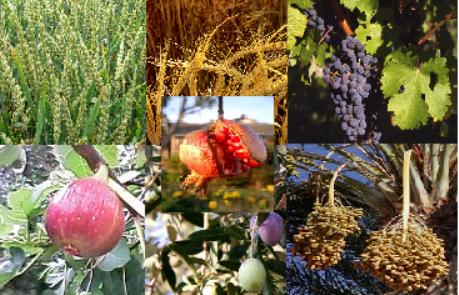
All biblical gardens ought to focus on these particular grains and fruits, they ought to be planted in each garden. God provided these seven special species for the ancient Israelites; as their primary food source as well as for economic cultivation.
The Seven Species (Hebrew: שבעת המינים, Shiv'at HaMinim) are seven types of fruits and grains enumerated in the Hebrew Bible as being special products of the Land of Israel.
The seven species are:
These seven species are customarillly eaten on Tu Bishvat, the Jewish "New Year for Trees", on Sukkot, the "Festival of Booths", and on Shavuot, the "Festival of Weeks". In halakha (Jewish law), they are considered more important than other fruits, and a special blessing is recited after eating them. Additionally, the blessing prior to eating them precedes those of other food items, except for bread.
The First Fruits offering in the Temple in Jerusalem was brought from the Seven Species.
Wheat
Triticum dicoccon, Emmer Wheat. It was one of the first crops domesticated in the
Or Triticum aestivum L.
Wheat is mentioned together with barley 13 times in the Bible, and eight times alone. Scientists believe the wheat of the Bible to have been Triticum aestivum L, a cultivated summer and winter wheat, though other varieties grew both wild and cultivated. "Corn" is mentioned no less than 71 times but the intention of course is not American corn ( Zea mays o L , a.k.a. Indian corn or maize) but rather the general term "grain". It is the various translations of the original Hebrew dagan , that have misled many to think it unusual that tortillas never caught on in the native diet.
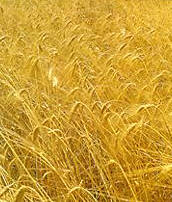
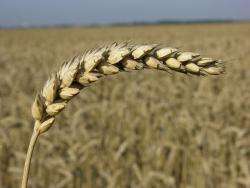
Articles about wheat:
Archeologists find 3,300-year-old burnt wheat at Tel Hazor, Israel
Barley
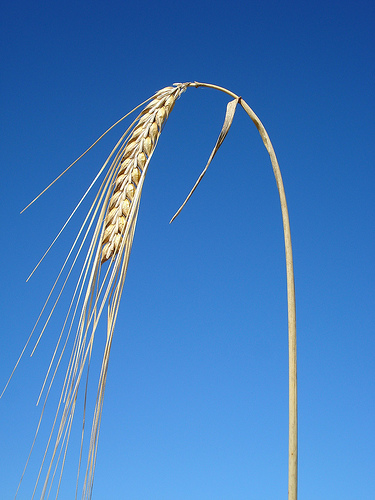
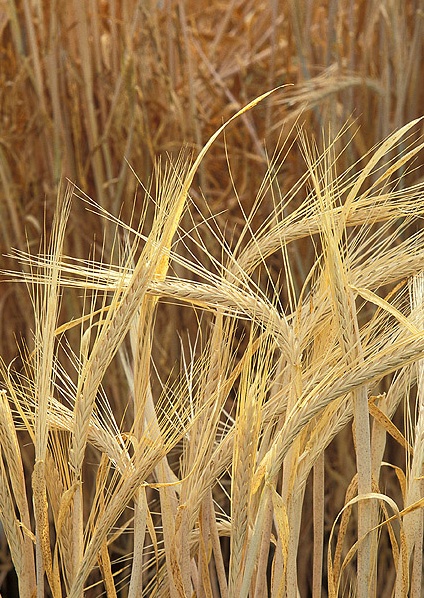
Hordeum vulgare ssp. spontaneum Wild barley. The earliest evidence of wild barley in an archaeological context comes from the Epipaleolithic at Ohalo II at the southern end of the
Grapes
Vitis vinifera - Common Grape Vine The appearance of Vitis vinifera on earth has been dated to between 130 to 200 million years ago. Mankind’s relationship to this plant dates to the Neolithic period.
Figs
Ficus carica – Common Fig The edible fig is one of the first plants that were cultivated by humans dating to about 9400–9200 BC in the
"Train up a fig tree in the way it should go, and when you are old sit under the shade of it." — Charles Dickens
Pomegranates
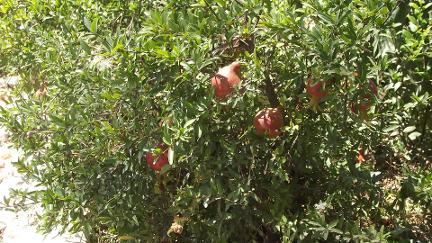
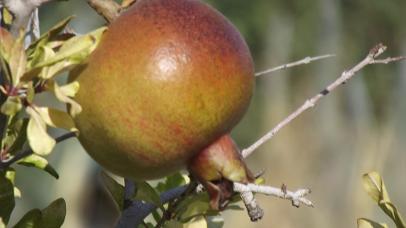
Punica granatum -Pomegranate is a fruit-bearing deciduous shrub or small tree growing to between five and eight meters tall. The pomegranate is native to Iran and has been cultivated and naturalized over the whole Mediterranean region and the Caucasus since ancient times.
Olives
Olea europaea, Olive Tree native to the coastal areas of the eastern Mediterranean region, from Lebanon, Syria and the maritime parts of Turkey and northern Iran at the south end of the Caspian Sea
Honey (bee or date?)
Phoenix dactylifera, Date Palm - cultivated since ancient times from Mesopotamia to prehistoric